Tire Production Year Matters More Than Most Drivers Think
- Jan 14
- 1 min read

A tire can look perfectly fine on the outside and still be unsafe.
Tires are made of rubber compounds that age over time, even if the tread depth looks good and the tire hasn’t been driven much. Heat, oxygen, and UV exposure slowly break down the rubber, causing it to harden and lose grip.
That’s why the tire production year is critical.
You can find it on the sidewall as part of the DOT code — the last four digits show the week and year the tire was manufactured (for example, 3220 means week 32 of 2020).
Most manufacturers and safety organizations recommend replacing tires after 6 years, and no later than 10 years, regardless of appearance.
An old tire may:
Have reduced traction, especially in wet or cold conditions
Be more prone to cracking or sudden failure
Perform poorly during braking and emergency maneuvers
This tire looks OK, Right?

BUT IT IS NOT!
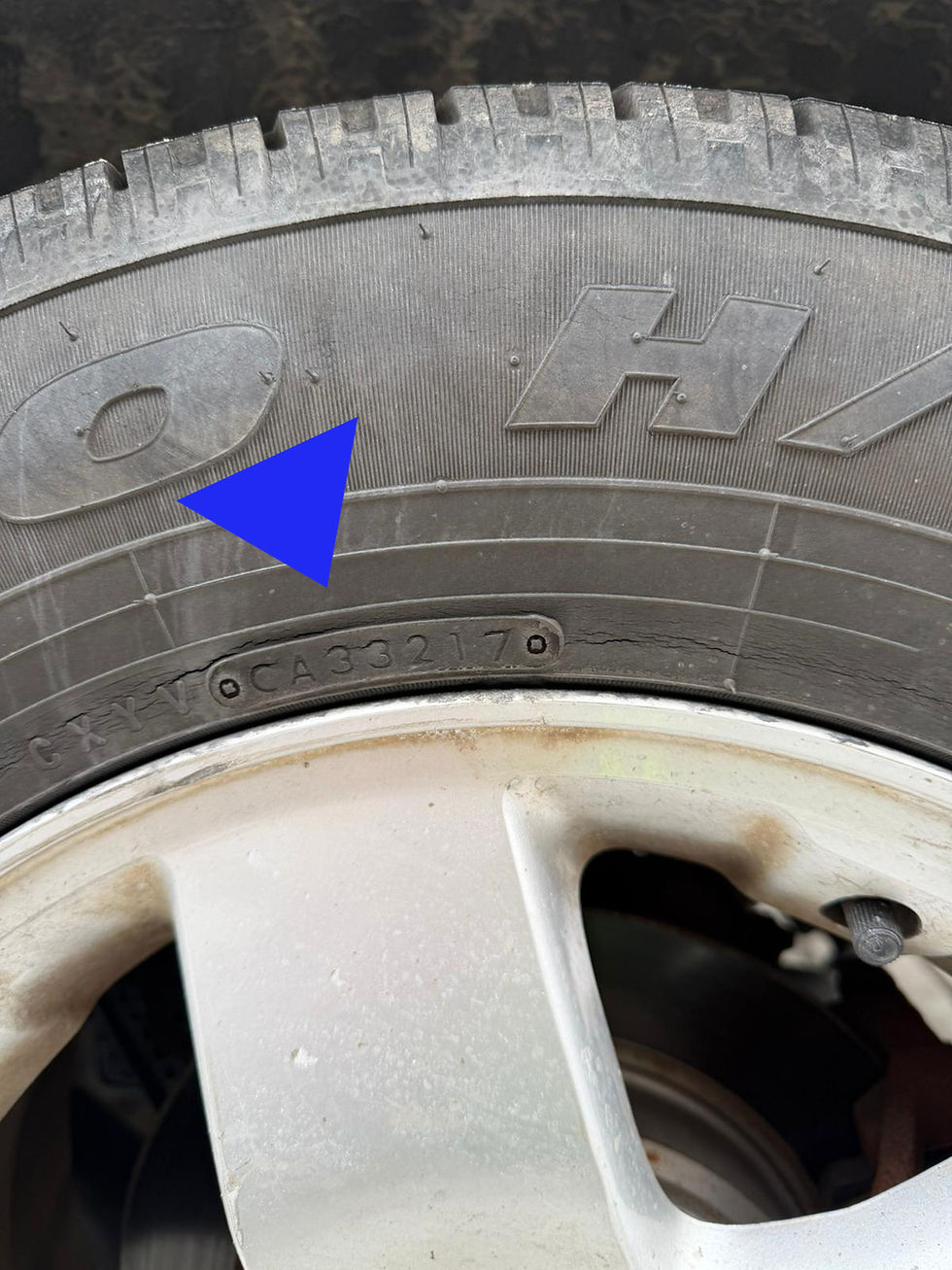
In short: good tread does not equal a good tire.Age matters — and ignoring it can compromise safety.


